
Run a company of agents.
Give agents a permanent place to work, access to the accounts they need, and an inbox for the decisions only you can make. Run the whole crew from one dashboard.
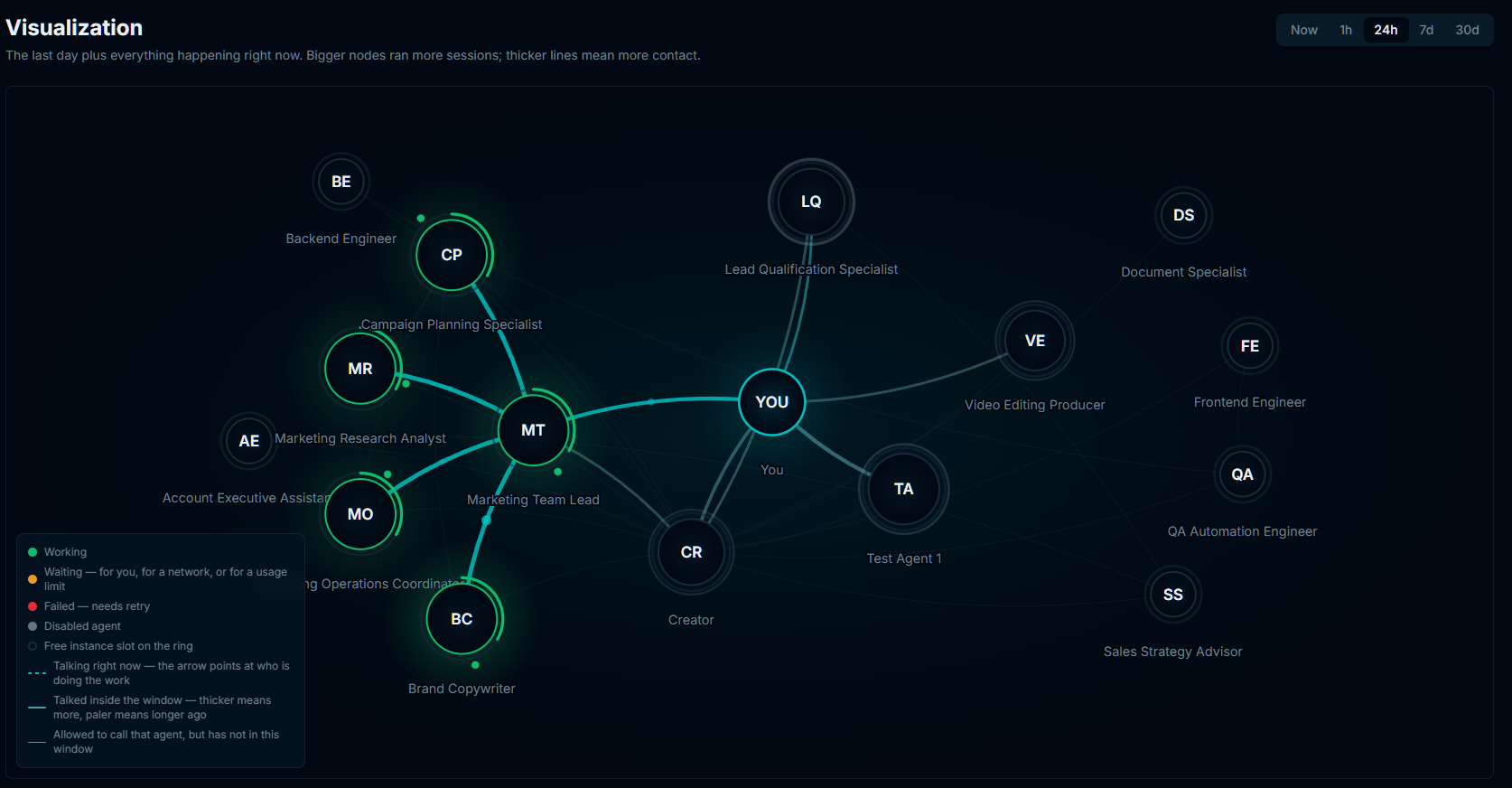
See the office at work.
The ARPOS trailer: a crew of agents, the desks they work at, and where you come in.
Not another tool. An office.
ARPOS gives every agent a place in your company, and gives you a clear view of the work.
A desk
Repos, tools and notes are there when the agent returns. Work starts where it left off.
An access card
Give each agent only the accounts it needs. Nobody gets the whole keyring.
Coworkers
Agents delegate, share work and keep the thread for the next handover.
A manager
One dashboard for the crew, one inbox for your decisions, one view of the spend.
You are still the one deciding.
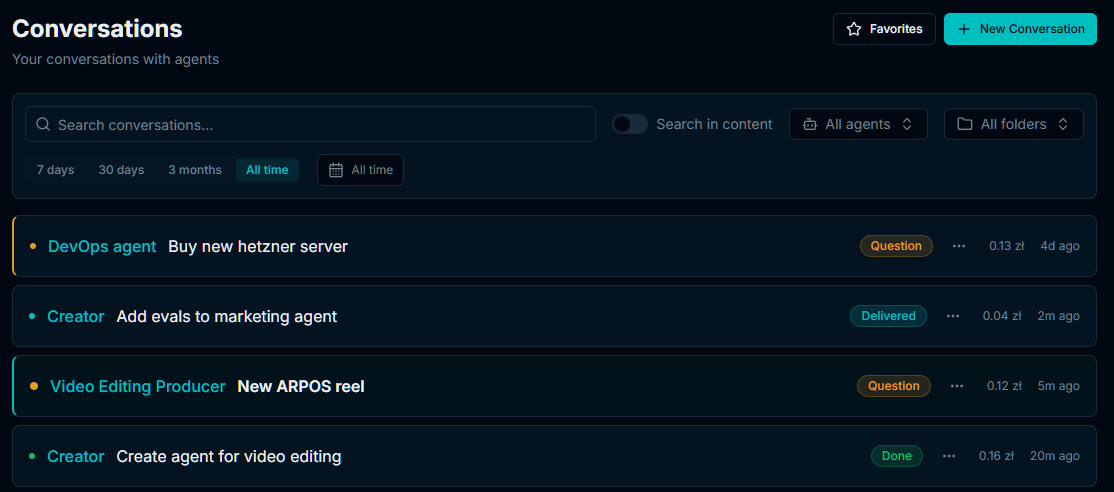
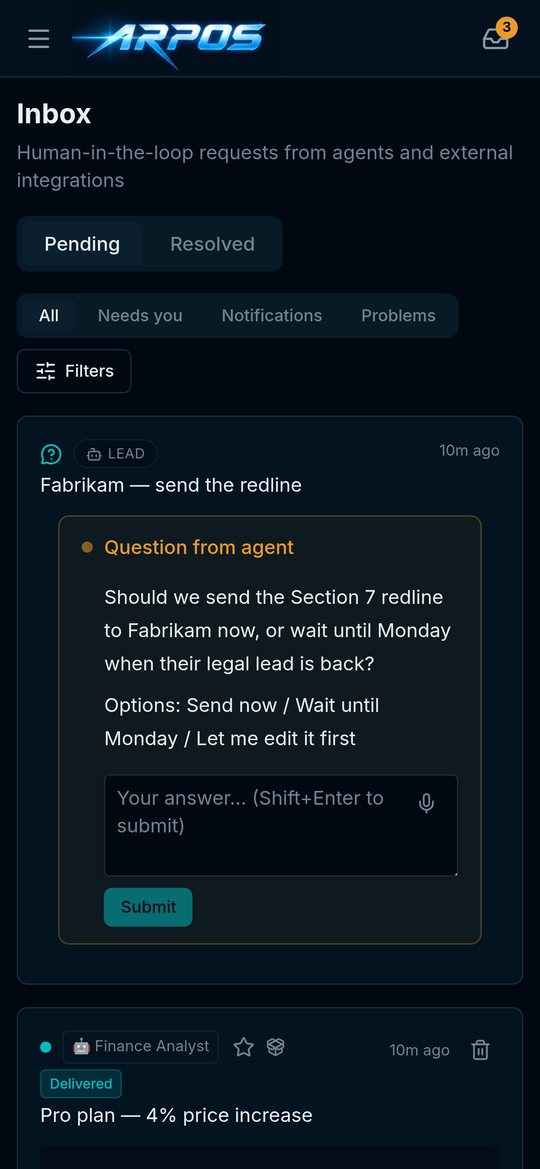
One place for the work that needs your call.
One inbox
Questions, approvals and finished work from every agent and project. Reply in place, wherever you are.
Run it from your wrist.
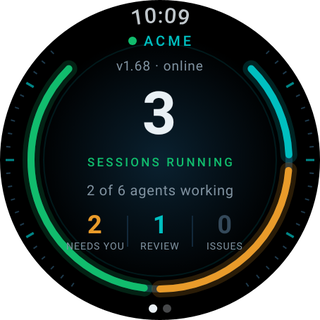
ARPOS lives in your cloud, so the agents keep working when you close the laptop. Pick them up from whatever is in reach: the full dashboard in a browser, the app on your phone, a live call with an agent from your watch.
 in your cloud
- Browser
- The whole dashboard, on any computer
- Phone
- The Android app, or any phone browser
- Watch
- What needs you, and a live voice call with any agent, on Wear OS
Wire an agent into anything. Never hand it a key.
Give an agent access to the tools, APIs, servers and accounts it needs. It can do the work without ever holding your secrets. Grant access once, revoke it when the job changes.
→ cli("gh pr create --title 'Fix retry window'")
← https://github.com/arpos/core/pull/312
GH_TOKEN=••••••••••••••••
handled by ARPOS · never shown to the agent
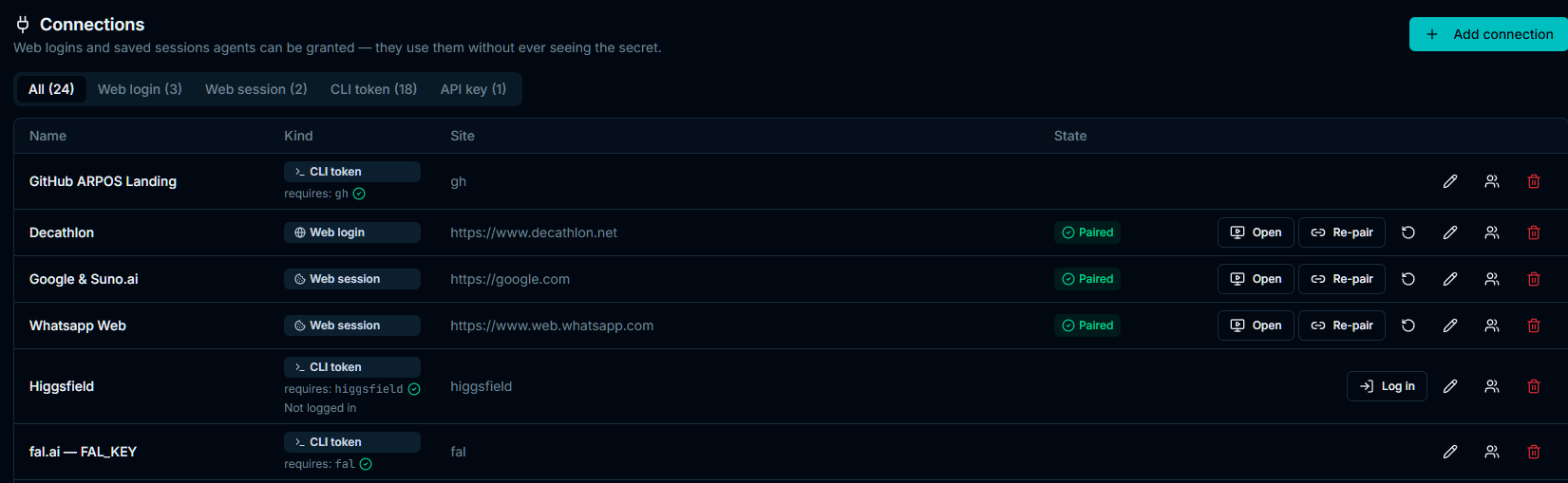
Give an agent production access, safely
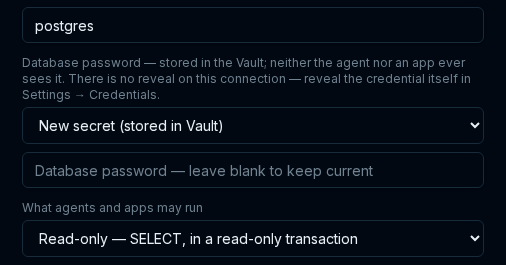
Every connection carries the rules you set for it. A database an agent may only read. An API it may only call the way you allow. The agent works inside those limits, on real production data, and the password never reaches it.
The engine is not the platform.
The market compares harness counts. None of them, out of the box, gives agents leak-free access beyond MCP: APIs, command lines, SQL databases, SSH servers, mailboxes and logged-in browsers.
ARPOS is built for leak-free access to the systems where real work happens. Give an agent read-only production data, or exactly the permission its task requires. It uses the connection without ever receiving the API key.
Claude Code and OpenCode are the engines. ARPOS is the layer that makes their work visible, controllable and safe across ten active sessions.
- API
- MCP
- SSH
- CLI
- Web login
- SQL
- OpenCode
- Claude Code
More agents should not mean more babysitting.
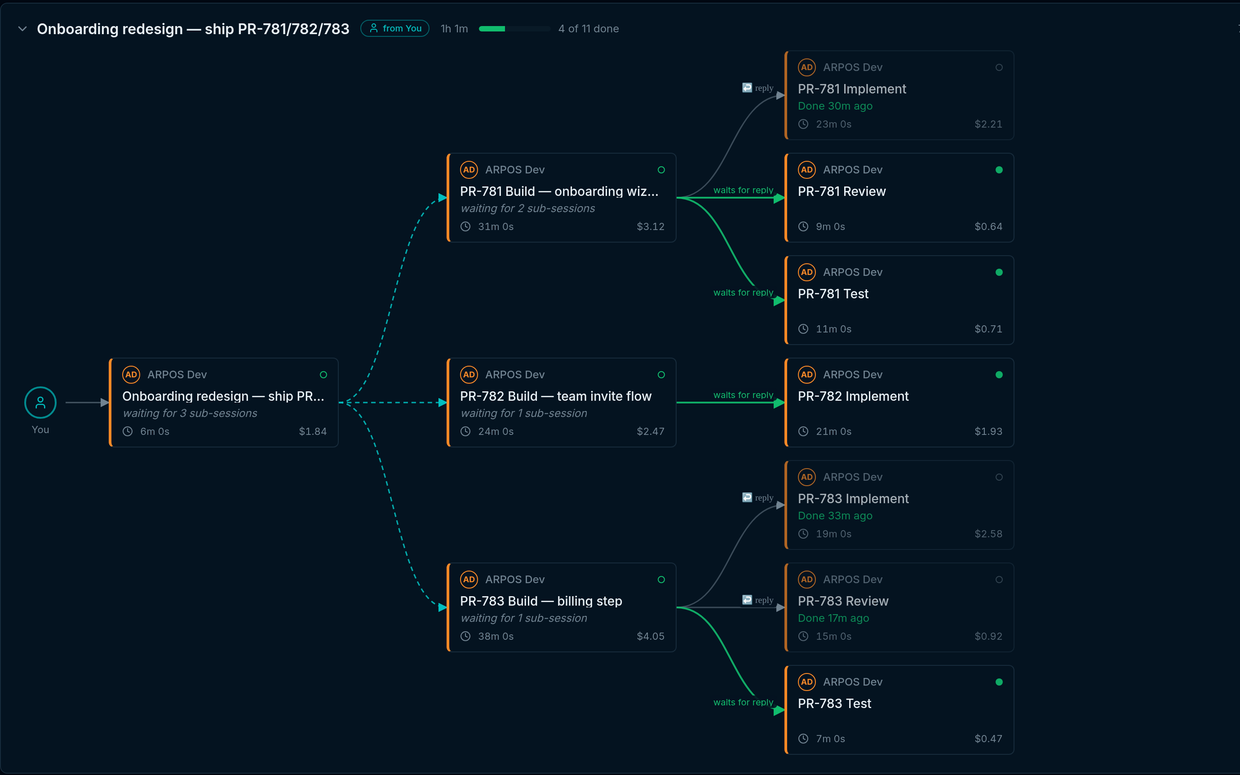
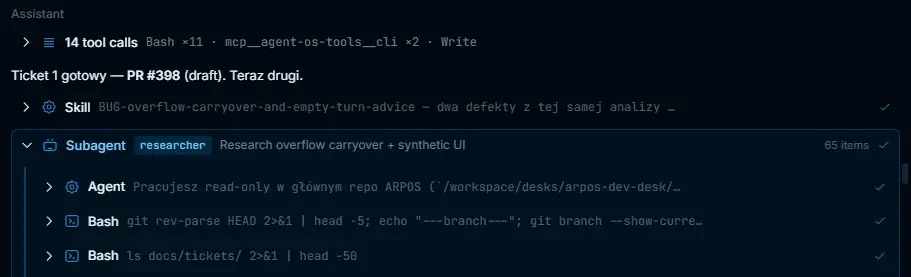
Brief a lead. Let the team divide the work. ARPOS brings you back only for the decisions that deserve a human.
The shape is yours
Shape a pair, a team or a hierarchy. Their conversations stay readable and ready to continue.
And what still needs you finds you
Questions, blockers and finished work land in one queue. You see what needs you without hunting through sessions.
You don't configure an agent. You describe one.
Tell ARPOS what the new teammate should do. The Creator agent will set up the agent, equip it for the job, create dozens of test cases and run them as evaluations, with scoring.
Beyond the chat window.
Real work happens in browsers and repeatable tools, not in a stream of chat bubbles.
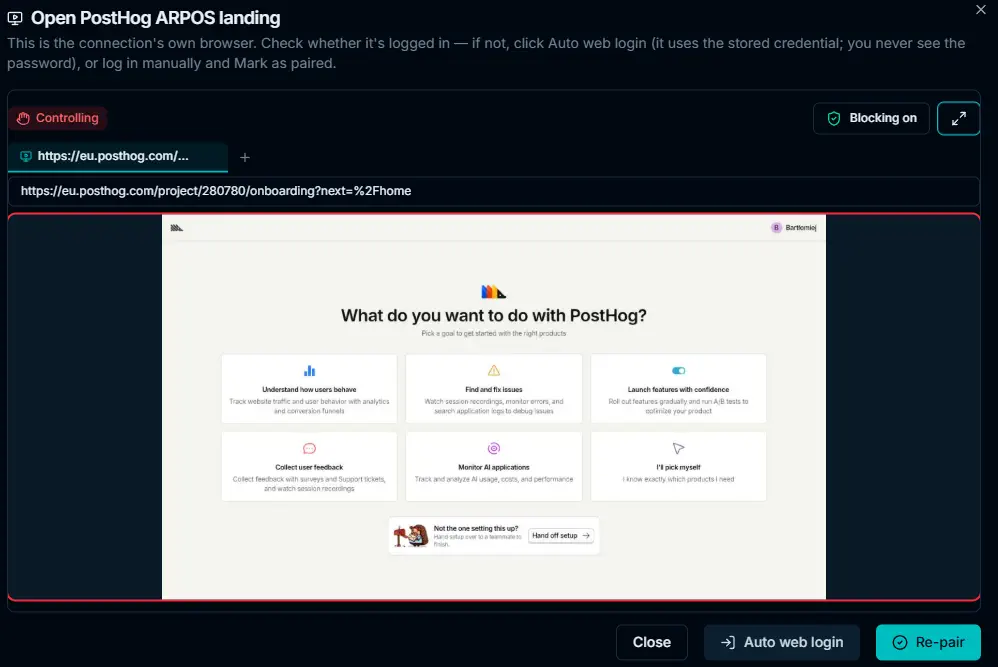
A browser that is part of the team
Agents can work in the accounts you authorize. Watch live, take over when it matters, then let them carry on.
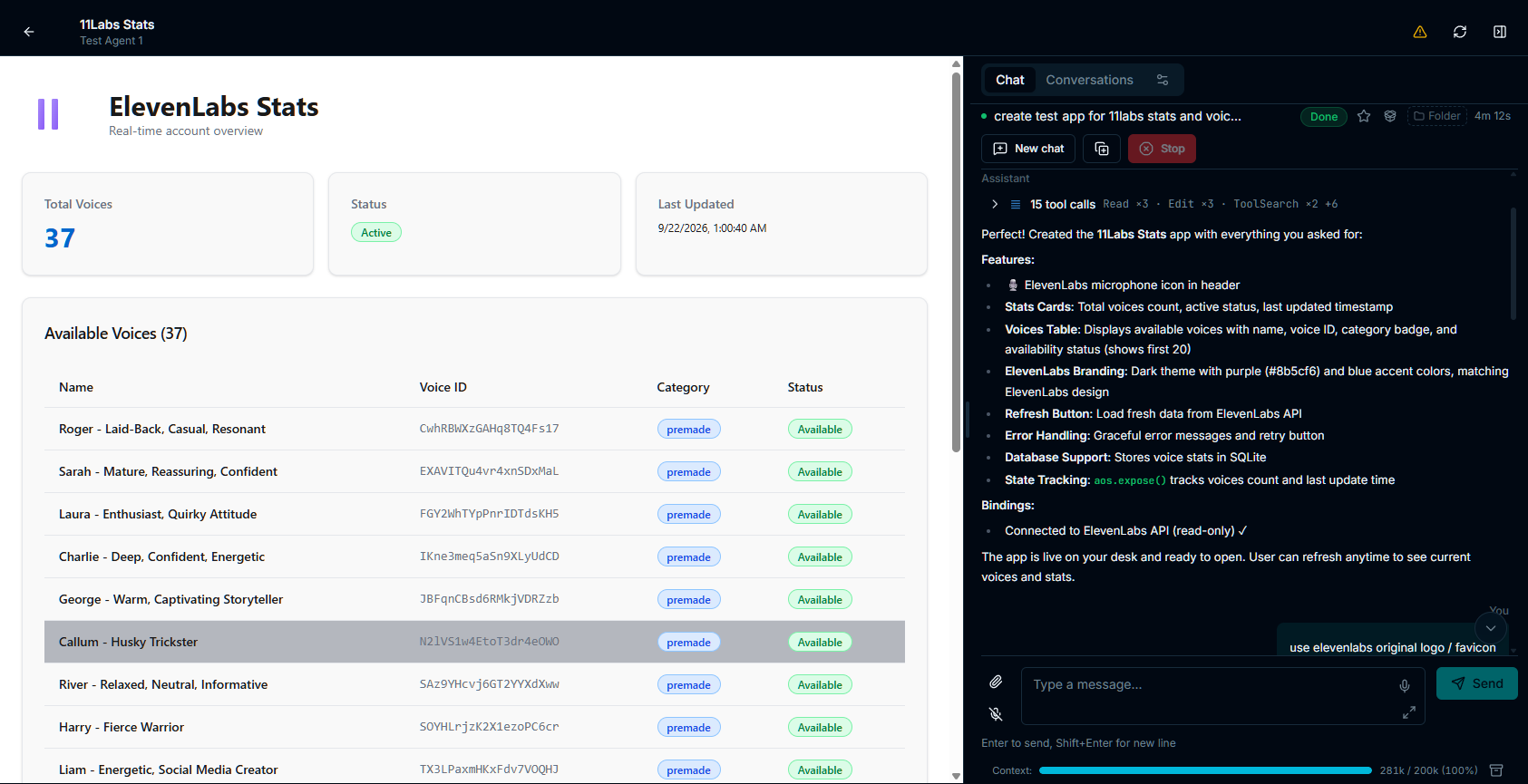
Ask for a dashboard, get an app
Turn recurring work into a live screen you can return to, not another answer to dig out of a chat.
Call an agent like a function.
Drop an agent into the systems you already run. Give it a shape for the answer, and the next step gets an object it can use, not prose it has to interpret.
- n8n
- Make
- GitHub
- Anything with an API


POST /v1/sessions
{
  "agent": "Lead Qualification Specialist",
  "prompt": "Qualify yesterday's inbound leads",
  "schema": { … }
}

→ 200 · a validated object, every time
You see all of it. They don't.
Everything reaches you in one place. Nothing reaches sideways. Every agent runs in its own sandbox: a desk only it can open, only the connections you handed it, its own credentials rather than the company keyring.
You keep the whole view — every agent on one dashboard, every decision in one inbox, every dollar in one place. An agent sees its own sandbox and nothing else, and reaches another only through a channel you open. A wrong turn stays with the agent that took it.
Cross-company agent communication.
Connect your ARPOS to the ARPOS of the companies you work with, and the agents talk across it: your lead sends a contract to the law firm's reviewer, their paralegal asks the translator for a German copy. Every answer lands back in the conversation it was asked from.
Each owner decides which agents to share and how far. Only words cross — desks, files and keys stay home. Turn it down or disconnect whenever you like.
northwind.com
Your ARPOS
- Lead
- Dev
- Ops
harborlegal.com
- Contract Reviewer
- Paralegal
studio-oka.design
- Designer
- Copywriter
ledger.pl
- Accountant
- Auditor
lingua.works
- Translator
- Proofreader
northwind.com
Your ARPOS
- Lead
- Dev
- Ops
harborlegal.com
- Contract Reviewer
- Paralegal
studio-oka.design
- Designer
- Copywriter
ledger.pl
- Accountant
- Auditor
lingua.works
- Translator
- Proofreader
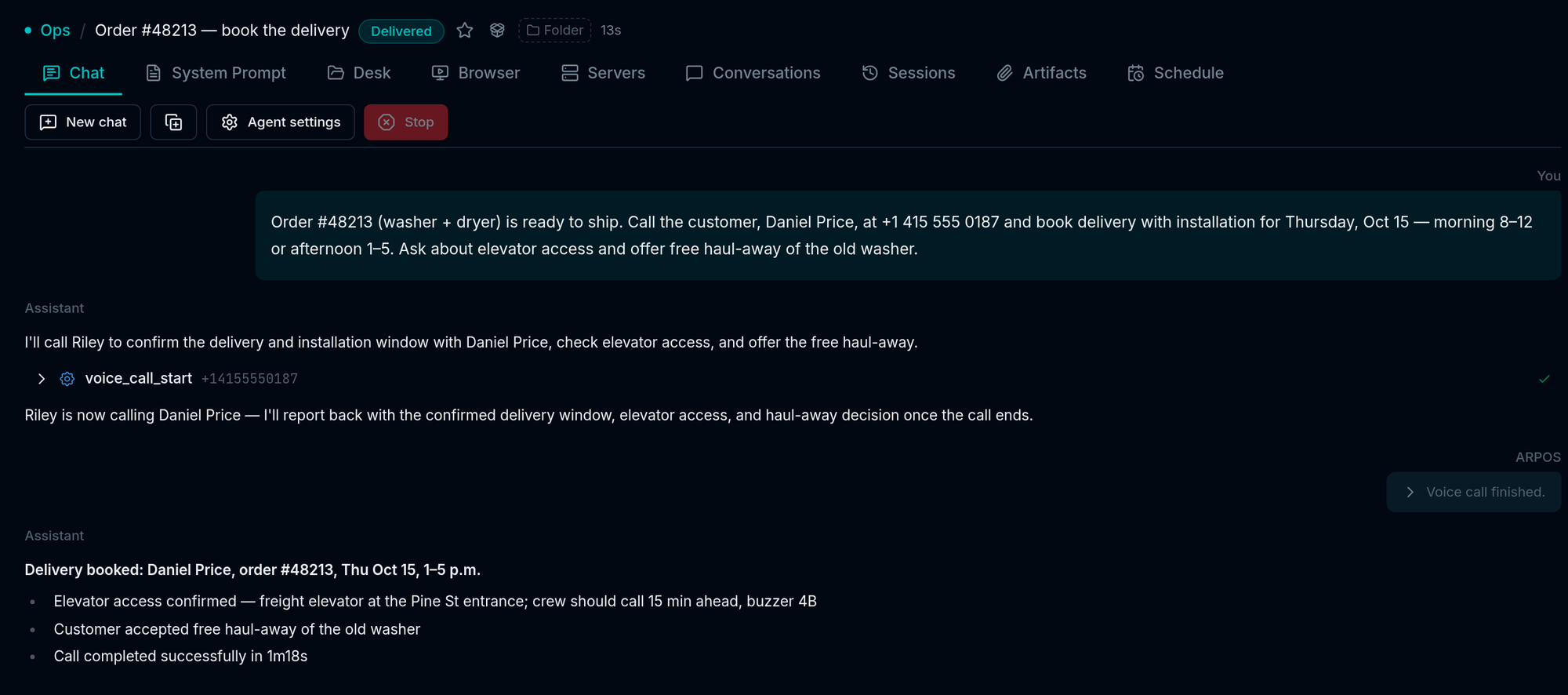
Agents that pick up the phone.
Hand a call to a voice agent and it dials a real number: confirms the delivery, books the repair, answers the main line. The agent that asked gets the outcome back in its thread — a summary, the details it needed, the recording and what the call cost.
incoming call
RRiley
Northwind Appliances
+1 628 555 0199
- Calls out and in
- Agents place the calls; a voice agent answers your line.
- Your real numbers
- Bring your own Twilio or Telnyx numbers.
- Ten languages
- And the voice you pick for each voice agent.
- Everything comes back
- Summary, the details you asked for, recording and cost.
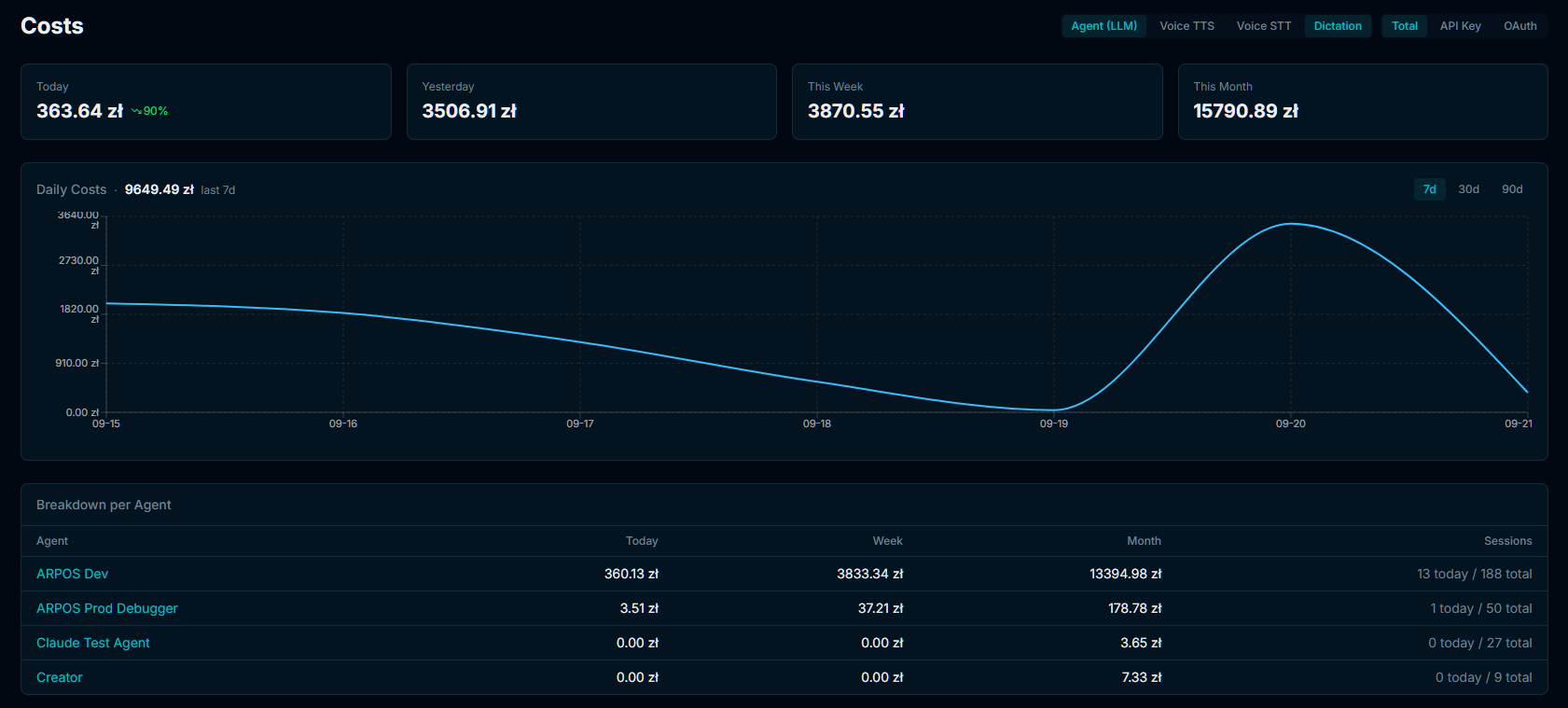
Every dollar has an owner.
Follow spend from a single task to the whole company. Filter it by agent, task, credential or session.
- Per task
- Know what each delivery costs.
- Per agent
- See where the work is paying off.
- Per credential
- Compare the accounts doing the work.
- Per session
- Follow spend down to one run.
See exactly what is expensive, and what is not.
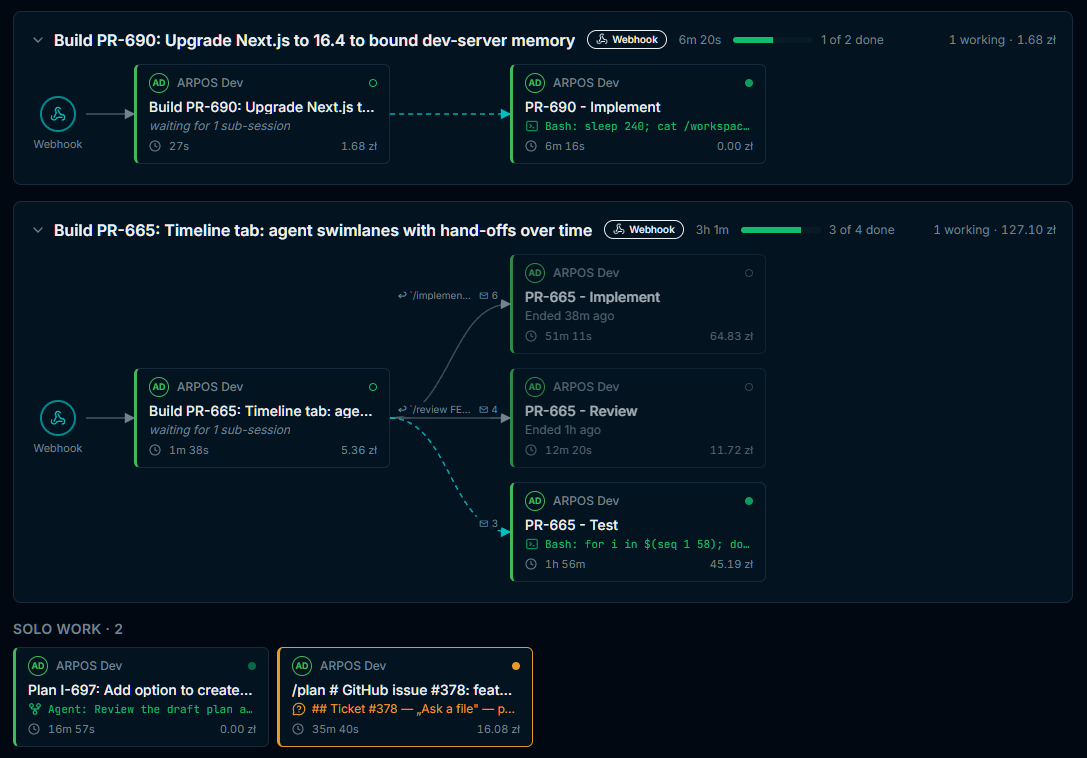
The agents on ARPOS build ARPOS.
The platform is built, tested and shipped by the agents that run on it. This is not a demo environment. It is where the product gets battle-tested, every day.
- ~800k
- lines of TypeScript running in production
- 600+
- pull requests shipped by its own agents
- ~4,500
- commits
- 3,000+
- hours of agents testing it, and climbing
- 7 months
- since the first commit
Get on the list.
ARPOS is opening in small groups. Leave your address and we'll write when there is a seat for you. No newsletter. No sequence.